An Experiment with a Rocket Stove - page 8
I was watching one of those survival shows the other day and the "expert"
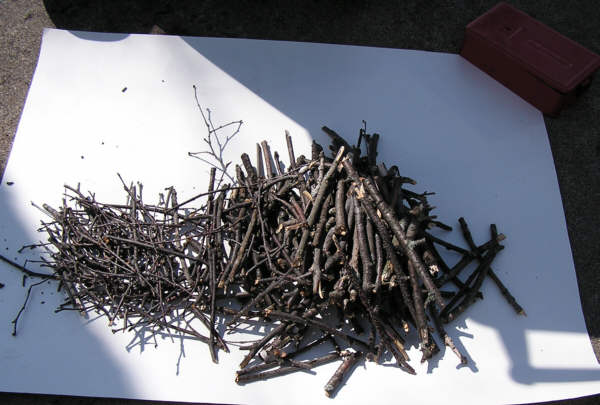
made an emergency stove out of a pop can. He cut off the top and cut some holes
on the bottom and the sides near the bottom. He then built a roaring little fire
to cook his dinner. This seemed like a great idea, so I thought I'd try to do
the same.
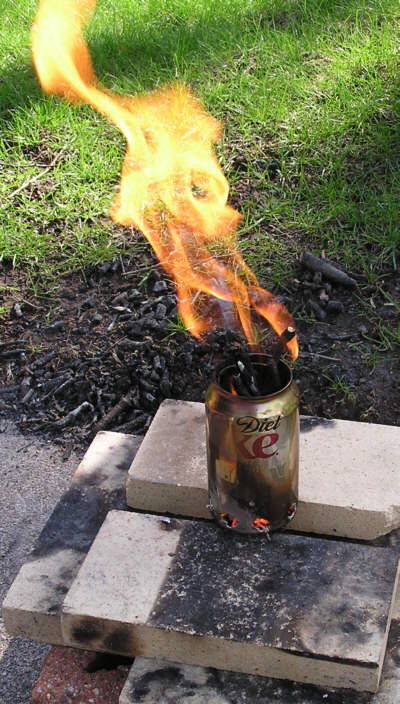
For my test, instead of sitting the can on the ground, I supported the can on
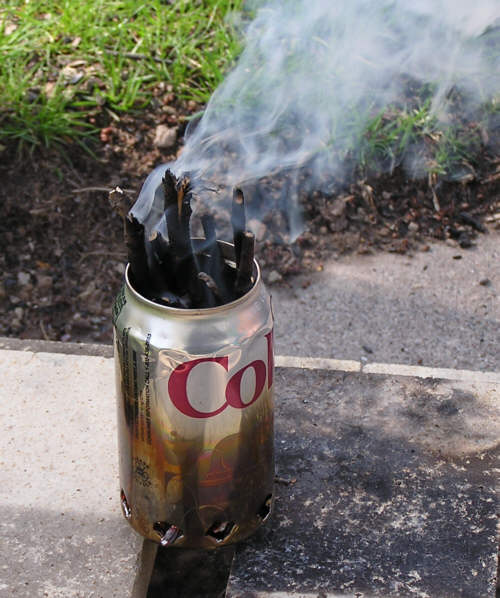
the outside to give air a better chance to get into the bottom holes. I lit the
sticks in the can but I found the fire would not stay lit. The fire burned a
little, then large amounts of smoke poured from the can. Every so often the
smoke would catch fire but only for a moment. As a signal fire (Or possibly a
wood gasifier) it seemed to work fairly well. When the fire actually started, within
about a minute the fire burned a big hole in the side of the can. I tried the
same thing with another can. This time I made bigger holes. The wood still
smoked but the fire started sooner. Unfortunately, in about a minute, the fire
burned a big hole in the can and the can just folded over. If I had been very
careful about adding sticks to the fire, I might possibly have kept the aluminum
can from melting, but this looks to me like another "Macgiver" special.
I decided to try the same kind of design with some "tin" cans, which of course are steel. The cans used were 26 oz. Hunts spaghetti sauce cans. Using a hand can opener, I cut holes in the bottom, holes in the side plus bottom, and one with the bottom removed and covered with hardware cloth. The two with the best air flow lit the fastest and worked the best. See pictures below. As ash covered the bottoms of the cans, the center stove, with holes in the side, worked the best, as the side holes were still mostly open.
With almost no chimney to create a strong draft, the stoves with the least restricted air flow seemed to work the best. Keeping the ashes from blocking air flow is important. Unlike the aluminum cans, the steel cans showed no problems with overheating.
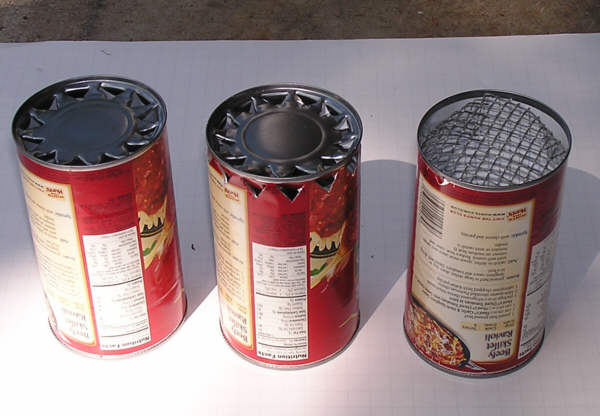
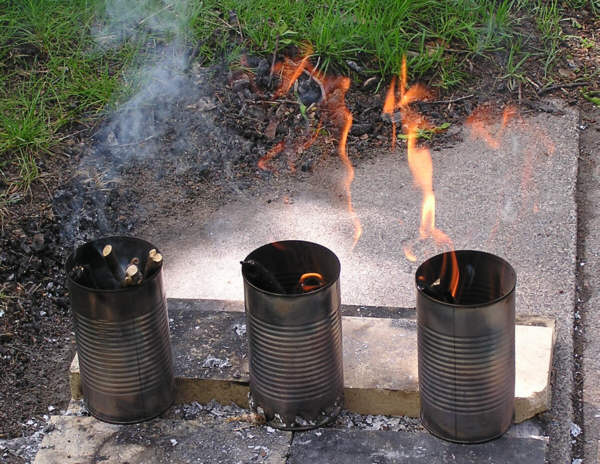
I tried comparing a tall 26 oz. spaghetti sauce can vs. a shorter and wider 29 oz. peach can. Again, the best results were with the bottom cut out and covered by hardware cloth. The wider can gave a larger fire, but the taller can gave a higher, more "focused" flame. The flame from the peach can stove was blown about easier by the wind. Any of these stoves would work best with protection from the wind. The pictures below show spaghetti sauce cans, with holes in the bottom, holes in the sides and bottom, and a 29 oz. peach can with the bottom removed and covered with hardware cloth.

L.B.