Chameleon F-Loop3 Magnetic Loop Repair
Living in an HOA community, I've been using a CHA F-Loop3 magnetic loop here in my indoor ham shack. I originally bought and built the F-Loop3 Basic DIY KIT when living in Michigan back in 2023 and upgraded the loops to the F-Loop3 Plus during a 2025 sale. I have noticed that the antenna tunes up well on 30 meters and above, but seems to have a very high VSWR on 40 meters. RX appears to work on all bands including 40, but transmitting on 40 always pegs the IC-705's VSWR meter when transmitting on that band.
Taking the day off today to support my northern neighbors and with it being almost -10F with a wind chill of -20 to -30 F outside, it seemed like a good day to to work on indoor antennas and take a closer look at the loop.
In addition to the high VSWR on 40 issue, I have noticed that sometimes when tuning that the receive signal cuts out (signal goes away completely). Turning the knob around that tuning point brings the signal back until it cuts out again. My guess is that the variable tuning capacitor might be intermittent open or short, and thus causing the tuning (and maybe the VSWR) issue.
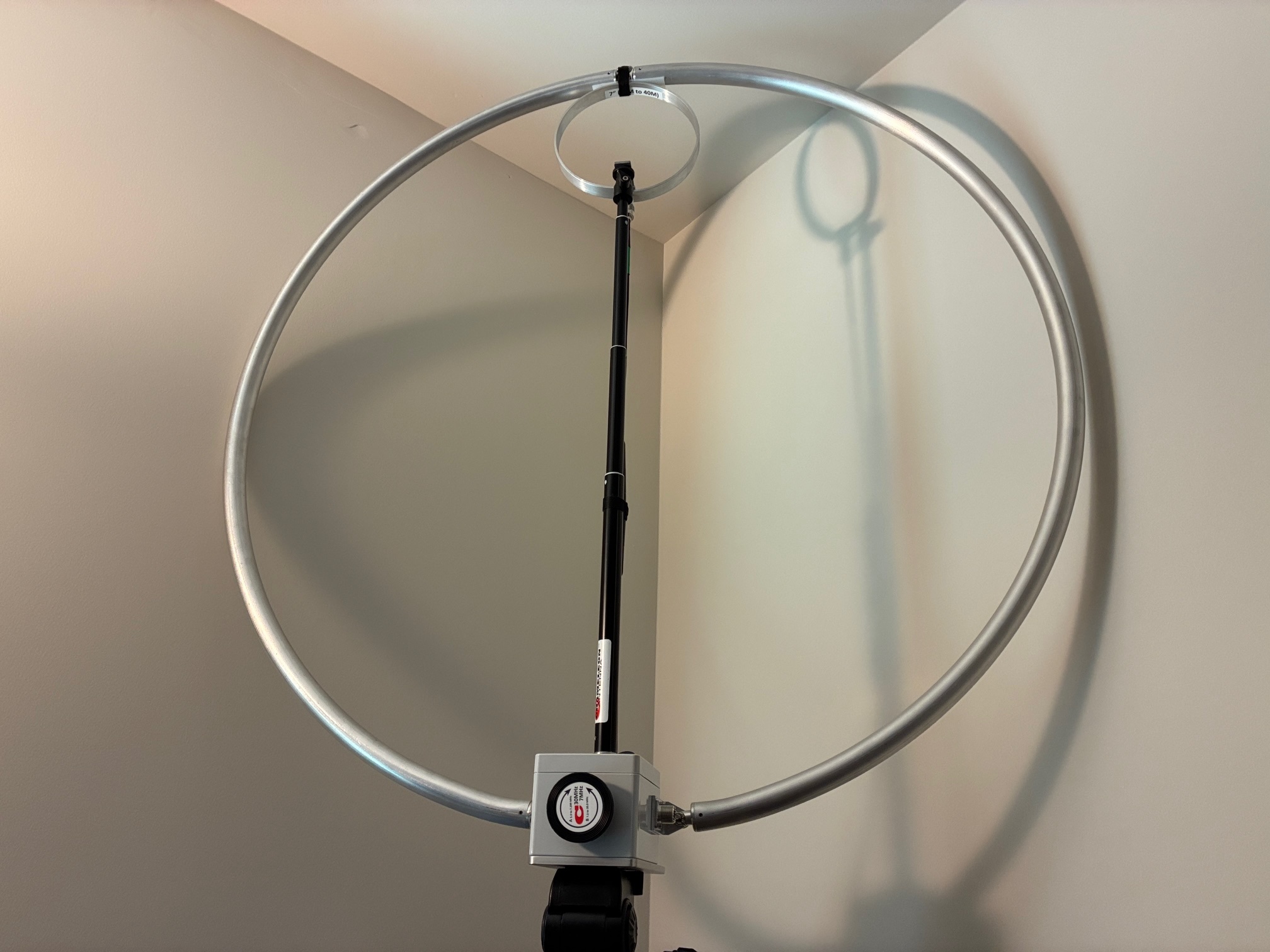
Let's take the tuning unit apart and see what's happening inside. As a refresher, here is a photo of the loop on its tripod at the edge of the side table.
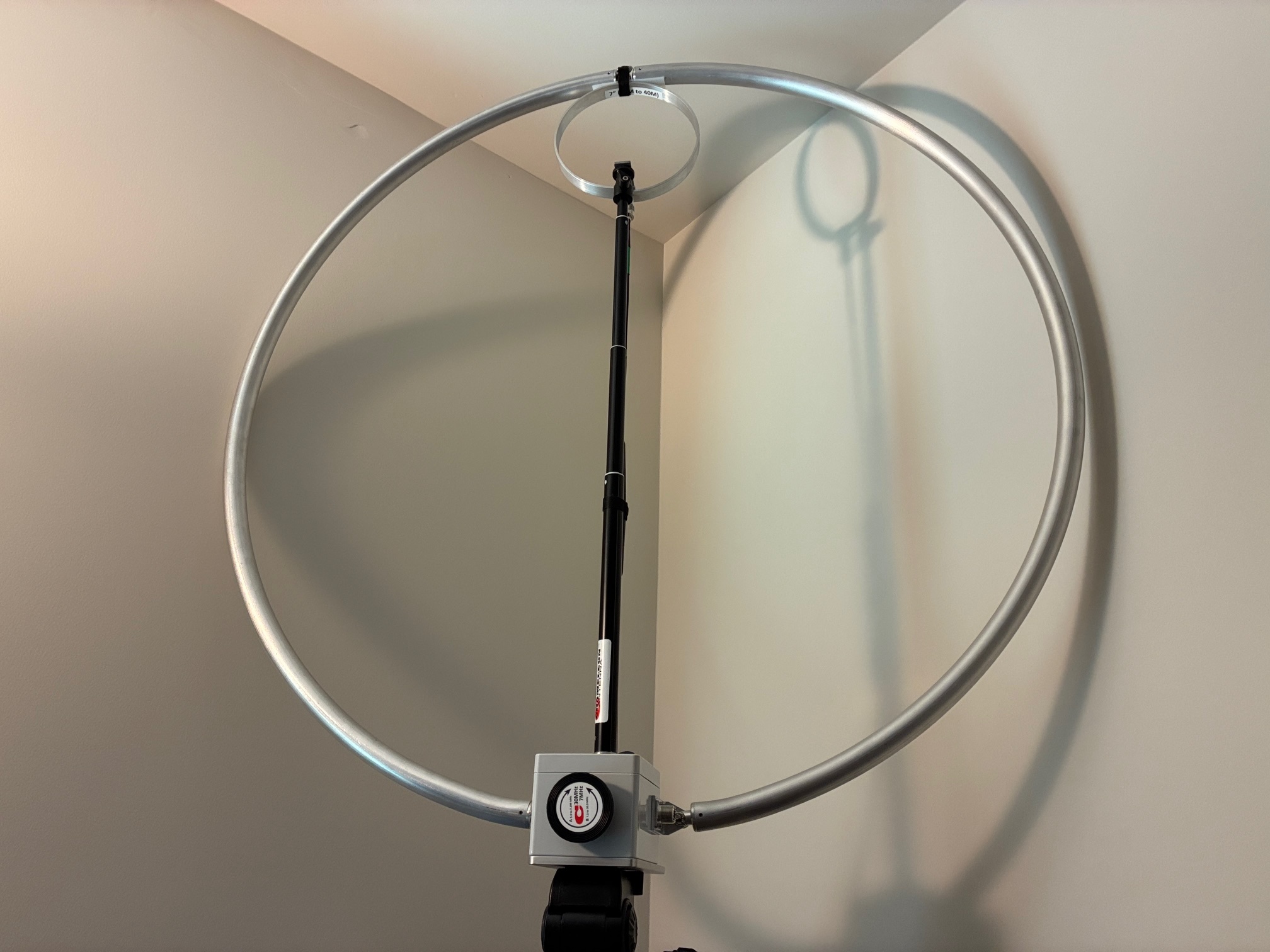
It does not look too big when up in the corner, but is actually a little ungainly to handle without bumping into things in my tiny home office. With the loops removed, the box is straight forward to work on.
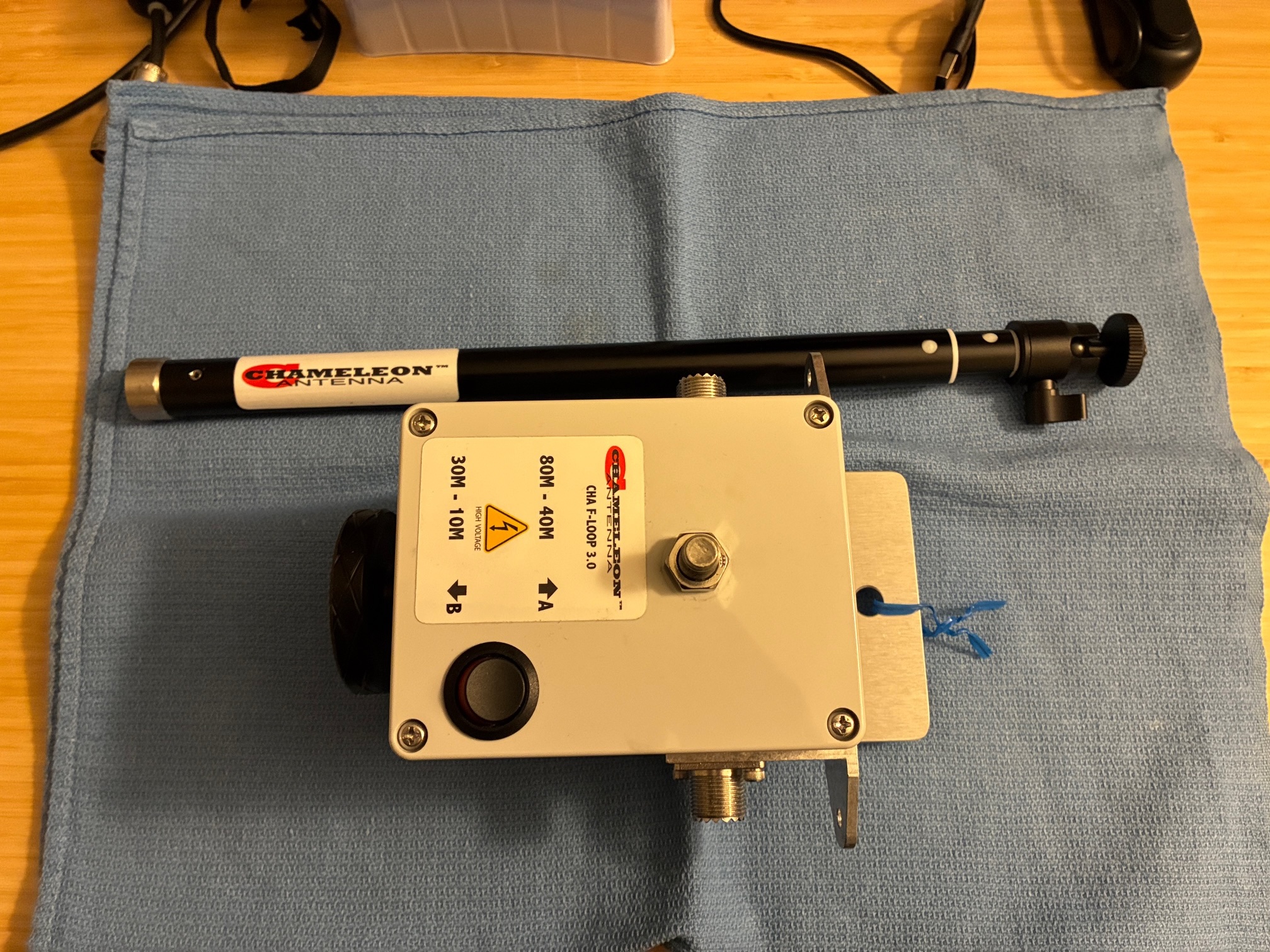
Not too much to see inside: Just a few wires, a switch, the two SO-239 jacks/flanges, and the vernier reduction drive variable capacitor (two section). The top side rocker switch hooks in the second capacitor section (closest to the knob on the left side of the enclosure) for operation below 30 meters.
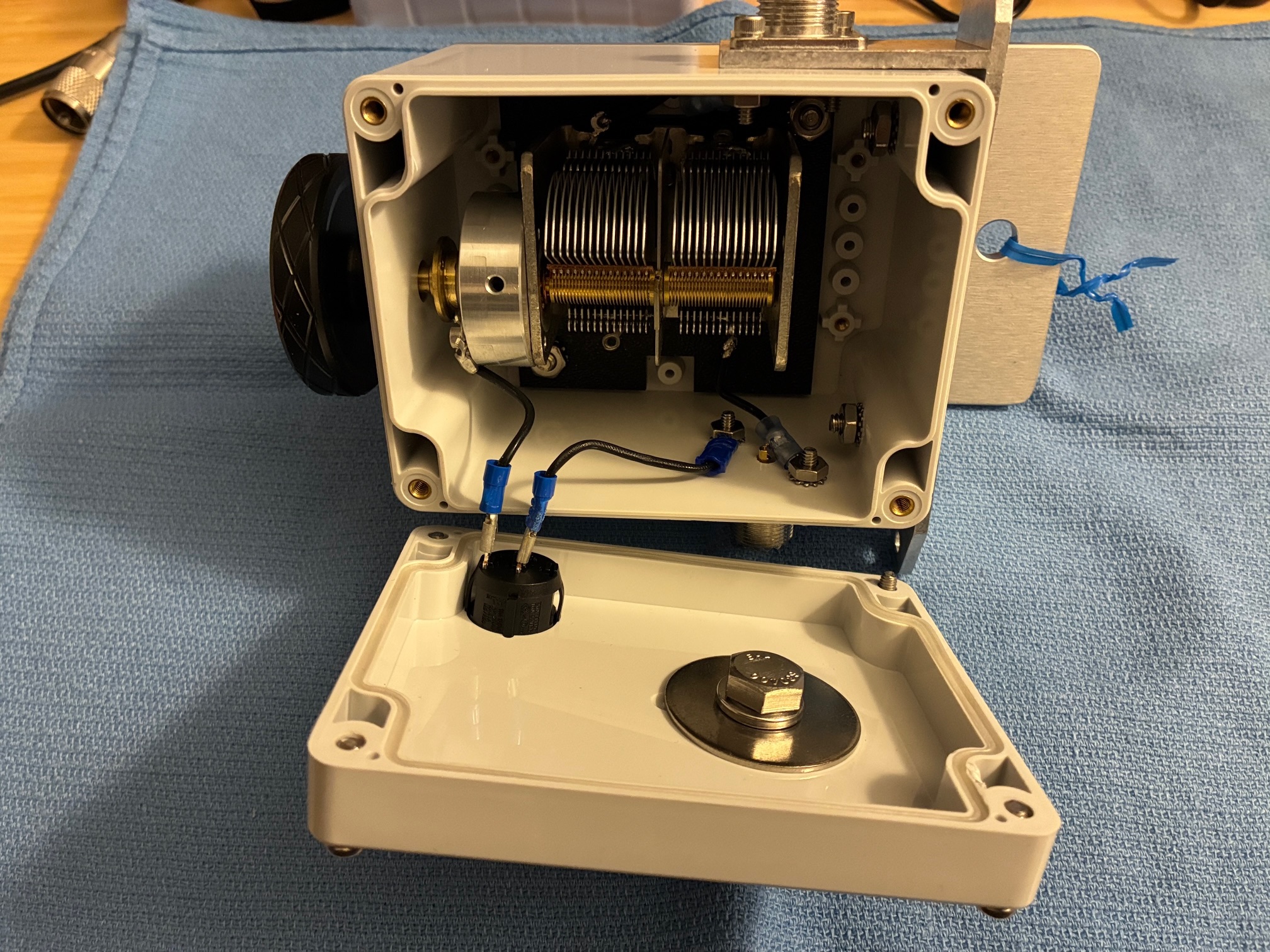
If you look closely, you'll see that the electrical connections to the SO-239 are only to the outer shield (not the inner conductor). This loop uses shorted loop connections at the PL-259 cables (basic version) or just outer shield connections for the solid aluminum loops in the plus version.
I had the idea to check for capacitor shorts using my DMM connected between the two SO-239 jacks (rear ear flanges). It was not as easy to get out a capacitance meter and start measuring the variable cap. Have in the past seen variable capacitors short in certain spots from RF arcs burning the individual capacitor plates to their neighbor. Was worried that this might be the case today even though I've never used more than 10W from the IC-705 with this antenna. Hooked up the DMM and set to measure OHM and beep on low-resistance/short.
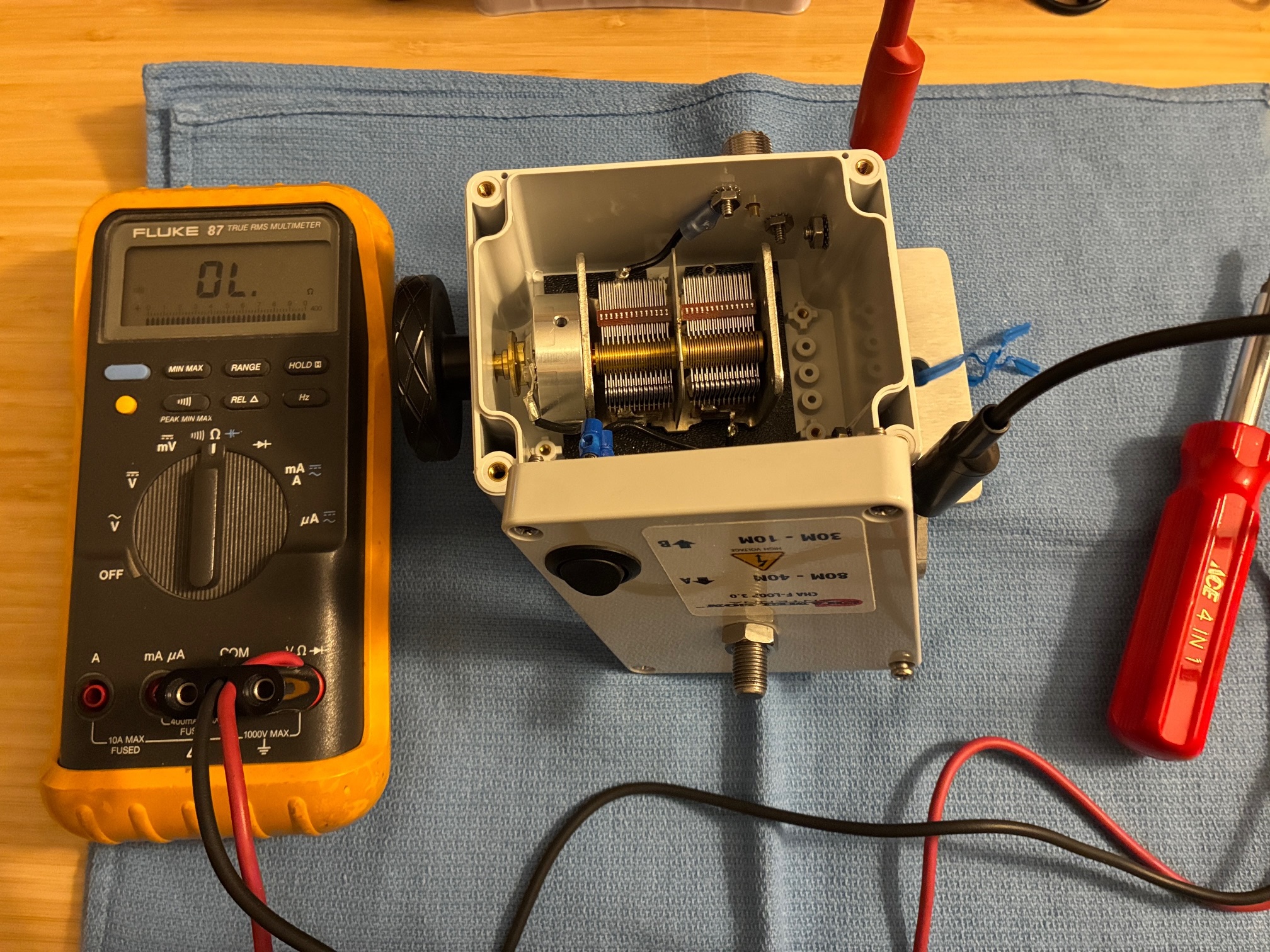
Sure enough, turning the tuning knob yielded DMM beeps (capacitor short) in multiple places when the frequency range switch was set to cover 40 meters (adding in the second variable capacitor in parallel). It was open always for the higher band selection (forward capacitor switched out of the circuit) and regularly showing an intermittent short when tuning with the second capacitor engaged.
Here is a closer view of the capacitor (lowest capacitance - rotor not meshed with stator).
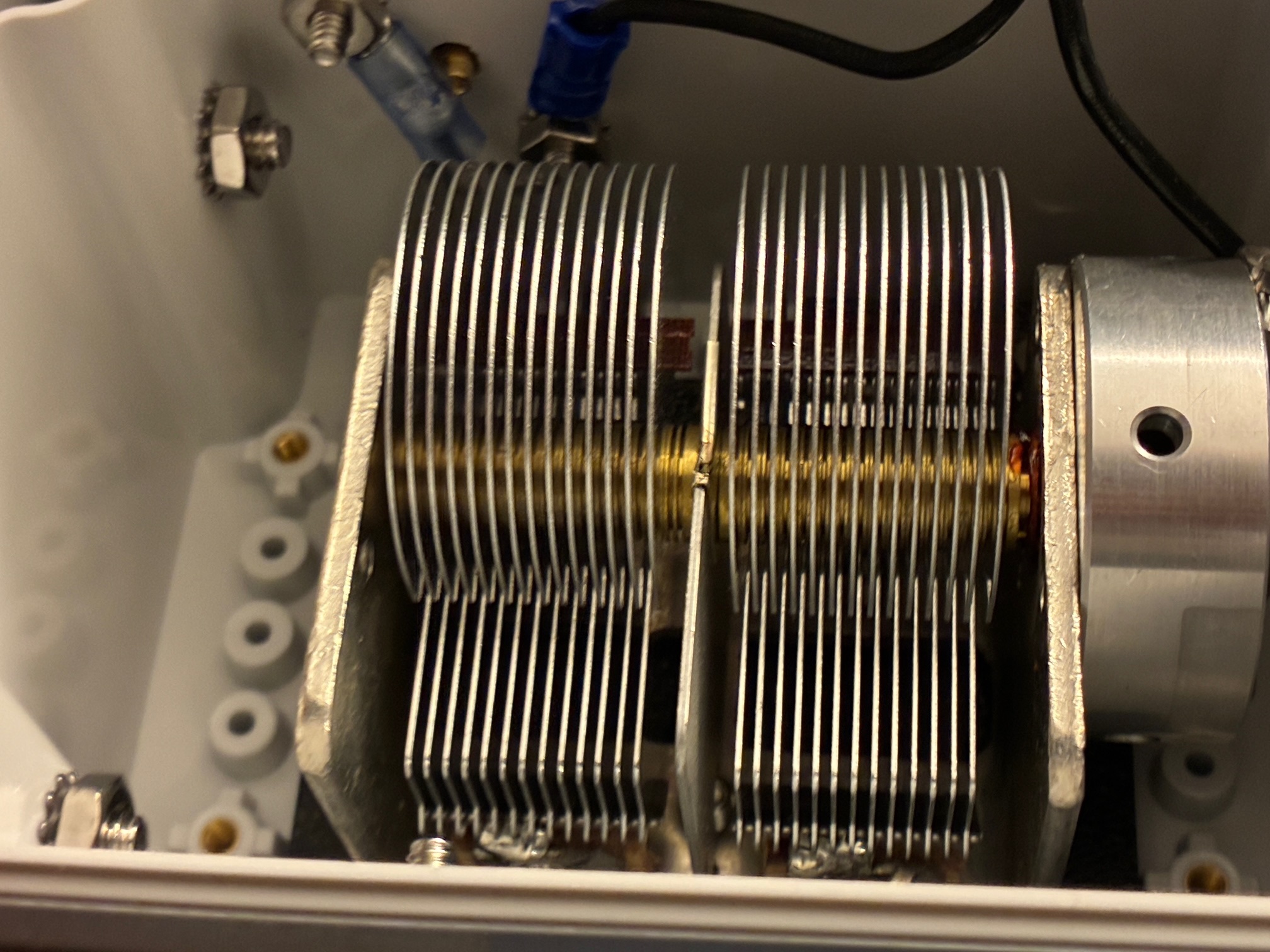
After looking closely at it and trying a few minor "nudge" adjustments on the rotor plates, I came up with the idea to place some small paper insulators between capacitor plates to see if I could narrow down where the shorting problem was.
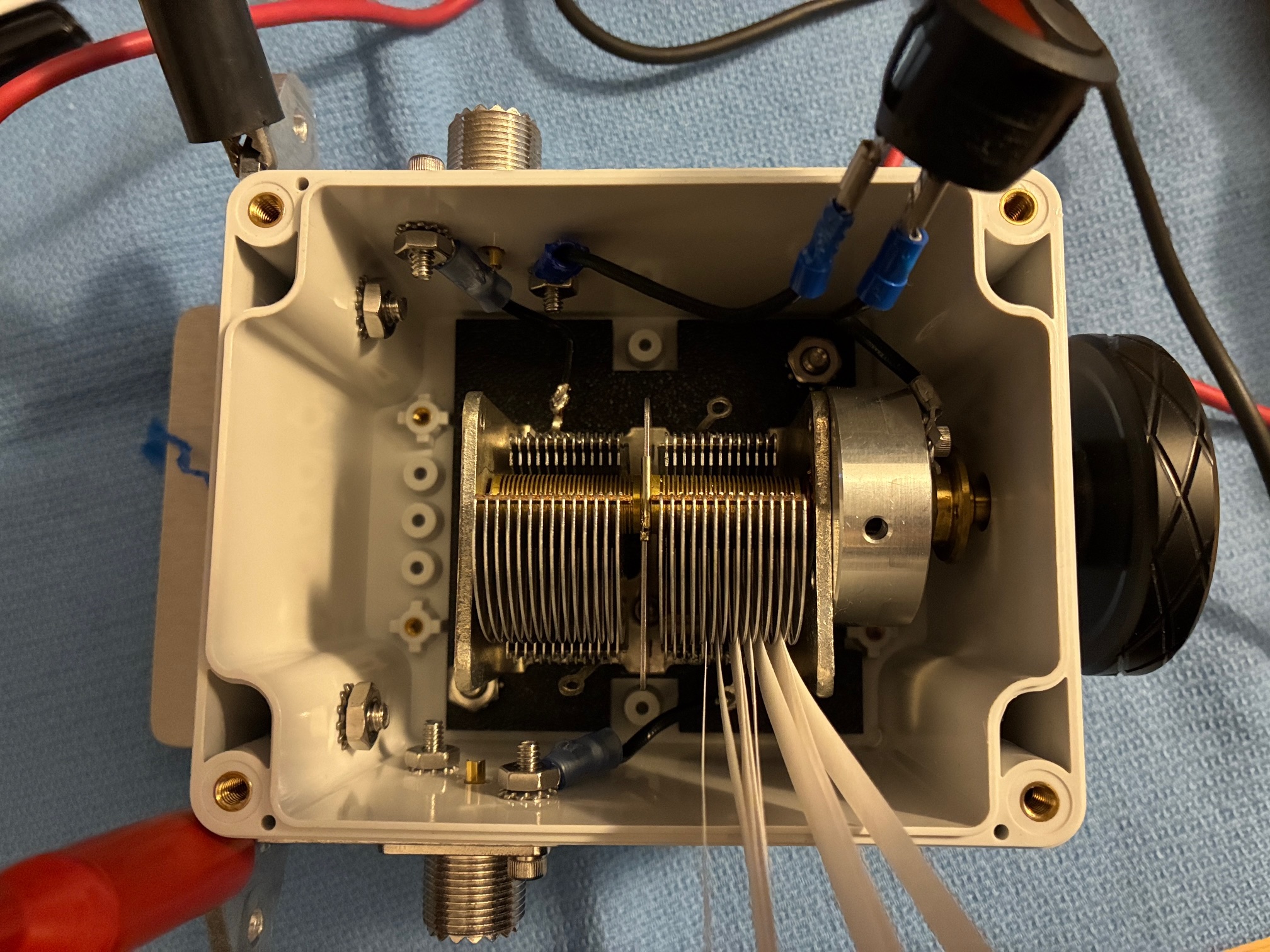
With these strips inserted, rotating the tuning knob yielded zero further shorts (DMM beeps) over the full range of adjustment. The next steps were very tedious, with careful adjustment of the plates, removing one/more of the paper strip insulators, and multiple inspections of the plate spacings in a wide variety of engagement/meshing orientations. I also found that pushing the tuning knob slightly in multiple directions while rotating the tuning position would also yield shorting beeps. These ended up taking the most time to resolve... Tedious would be an understatement for this activity.
Advance the clock by an hour / two and PRESTO! There are no further shorts! The below photo includes my white plastic tuning wonder tool used to carefully adjust the plate spacing of the capacitor.
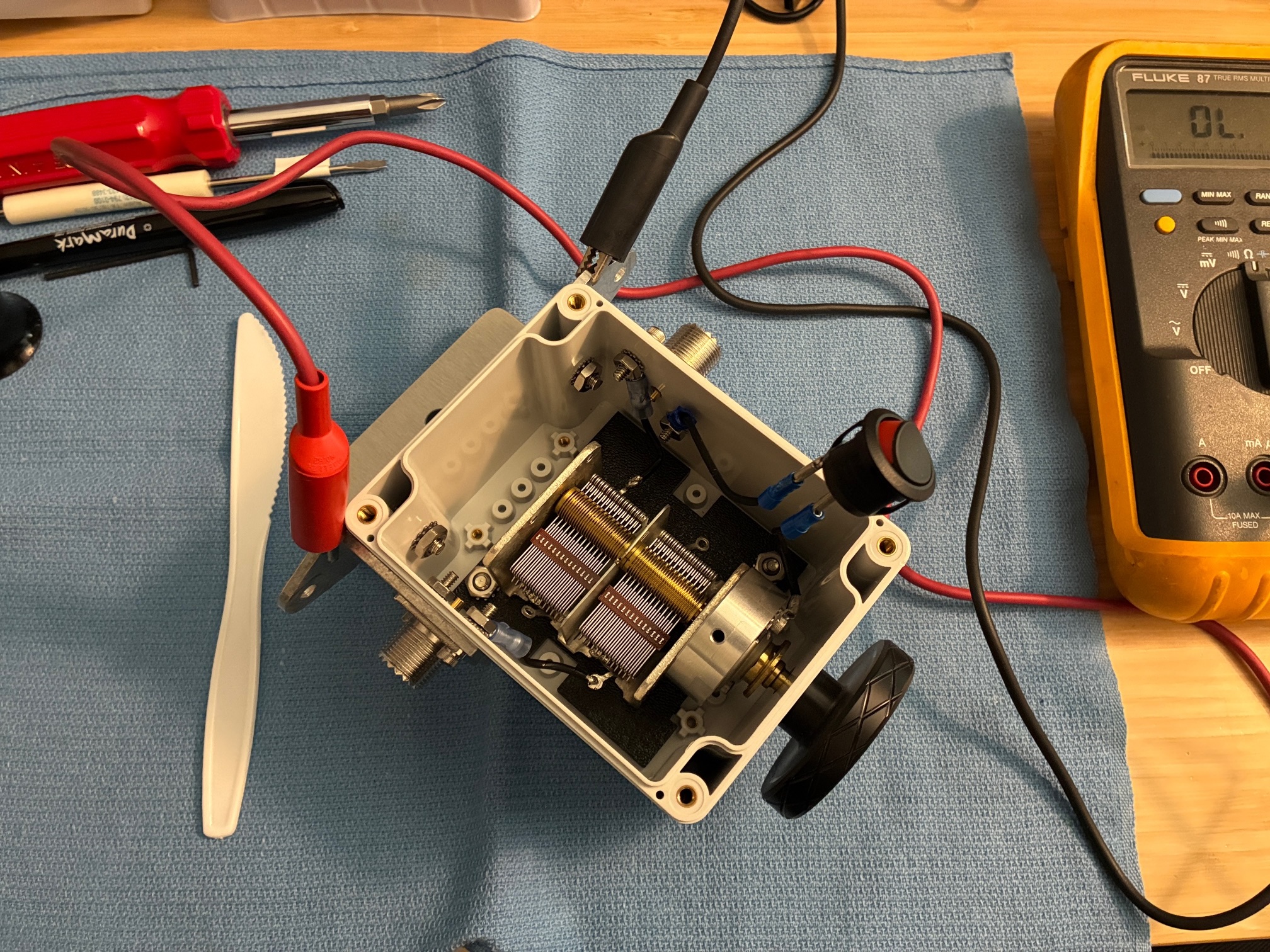
With that, the box was buttoned back up, tested again for shorts, and reassembled into loop antenna form. All bands were checked, and sure enough, 40 meters tuned up OK.
Achievement Unlocked: Tediously tweaked a multi-plate variable capacitor to remove intermittent shorts and repair a Chameleon F-Loop3 loop antenna. Back on the air on 40 Meters! (Have failed with similar variable capacitor "fixing" in the past, so very pleased this one was repaired!)
More CW fun ahead (now with 40 meters)!
All author photos taken with an iPhone 16e.