RF Attenuator as a Mixer?
Building on the recent test of an analog RF attenuator, this post flips the narrative and asks the question, will the Mini-Circuits ZFAS-15 component function as a RF mixer? Recall that the ZFAS-2000 (currently available similar component) had a schematic that looked the pretty much the same as a double-balanced RF mixer (using SBL-1X as an example mixer). Are these essentially the same when operated as a mixer?
The thought is to setup a simple mixer test setup and see how both devices (ZFAS-15 and SBL-1X) behave when mixing a CW signal with a fixed 100 MHz local oscillator.
Below is the setup using a 100 MHz crystal oscillator at +8 dBm for the local oscillator and the Pluto SDR TX and RX ports as either RF or IF of the "mixer". A test signal at 80 MHz will be mixed up to 180 MHz and the signal level captured at that frequency.
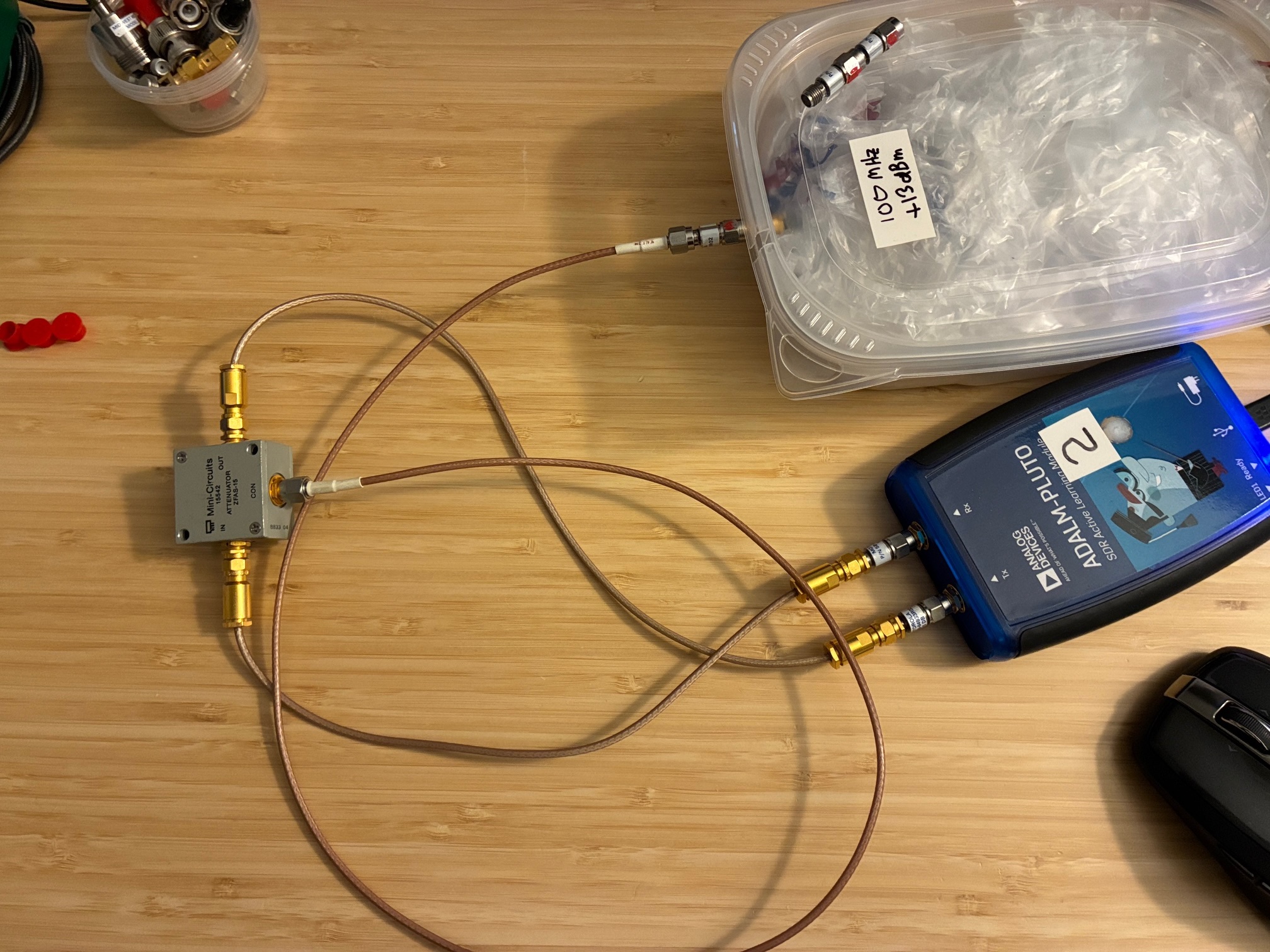
Interchanging the RF and IF ports did not make any difference for the simple tests performed today.
Test Notes: Setup to use device as a RF mixer. 100 MHz LO at ~ +8 dBm, 80 MHz @ -5.9 dBm test signal, 180 output at -17 dBm. Pluto TX to Out, Pluto RX to In. No change when in/out swapped. A screen capture of SATSAGEN is below showing the received signal at 180 MHz at -17 dBm.
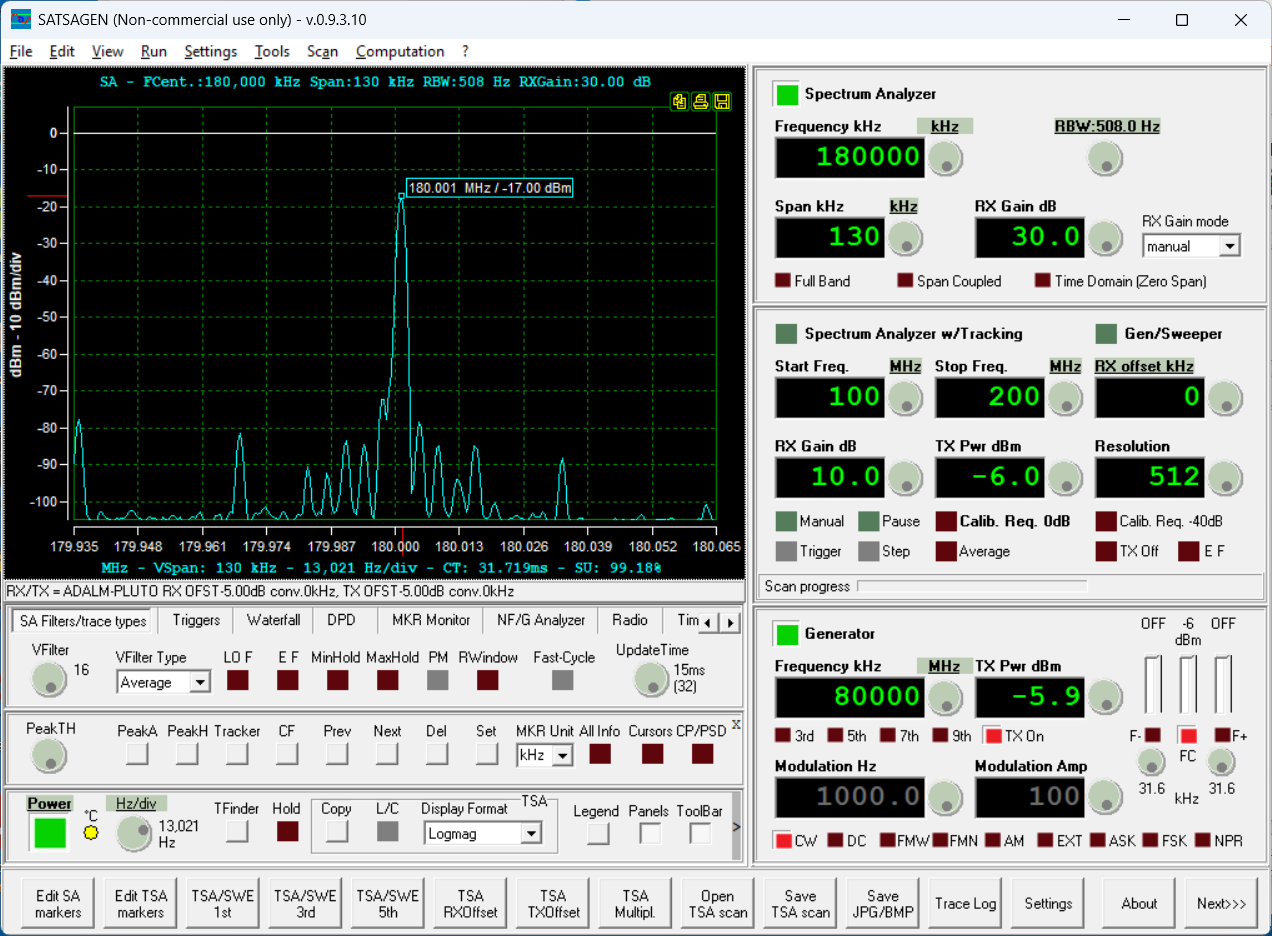
The test result is YES, the ZFAS-15 performs as a RF mixer as expected. Let's see how it compares to a real RF mixer (SBL-1X). Below is the adjusted test setup.
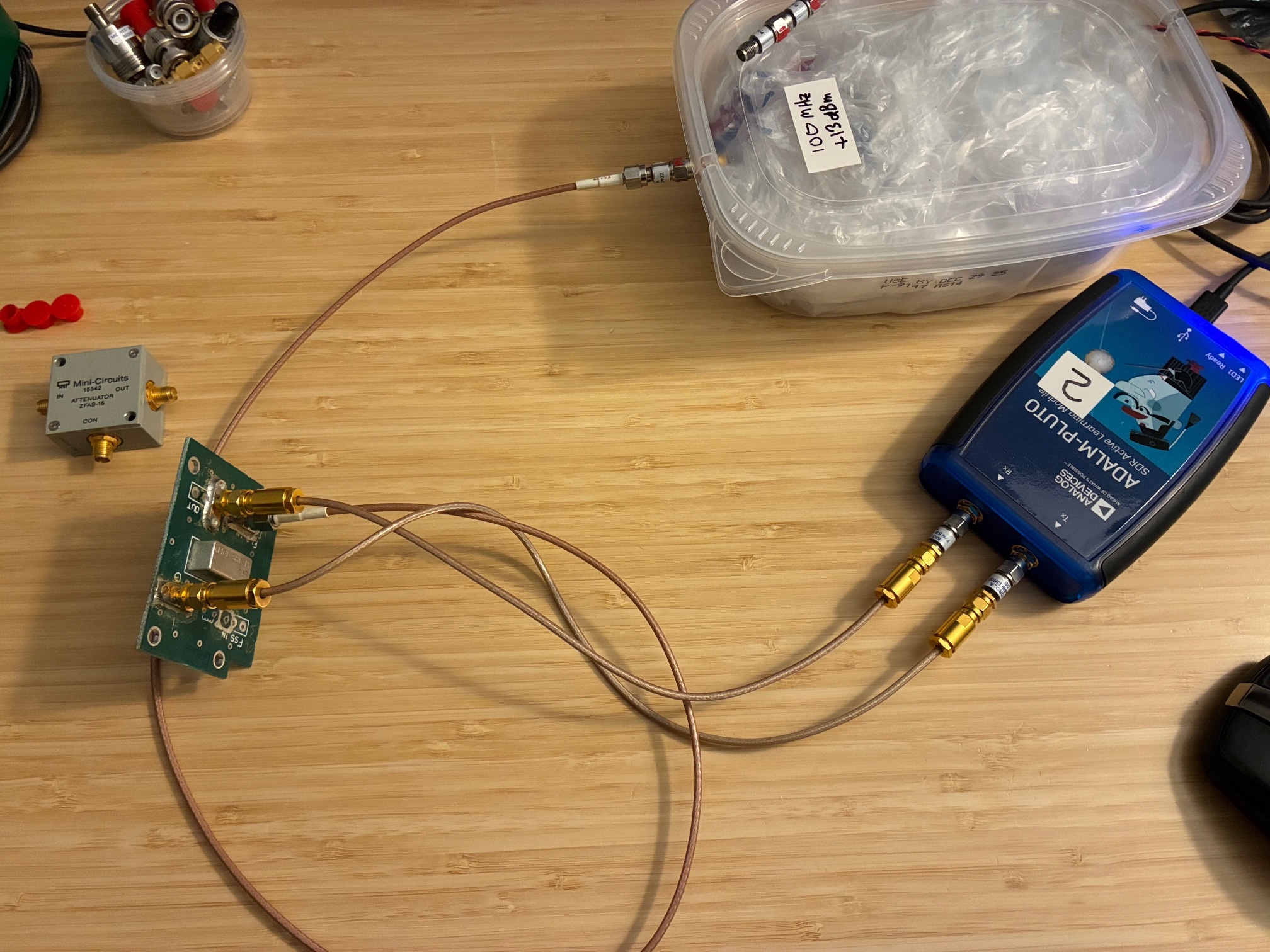
Test Notes: Swapped in SBL-1X mixer. LO to LO, TX to IF, RX to RF. Same reading of -17 dBm at 180 MHz. SATSAGEN screen capture below confirms no difference in mixed output signal level between these two devices.
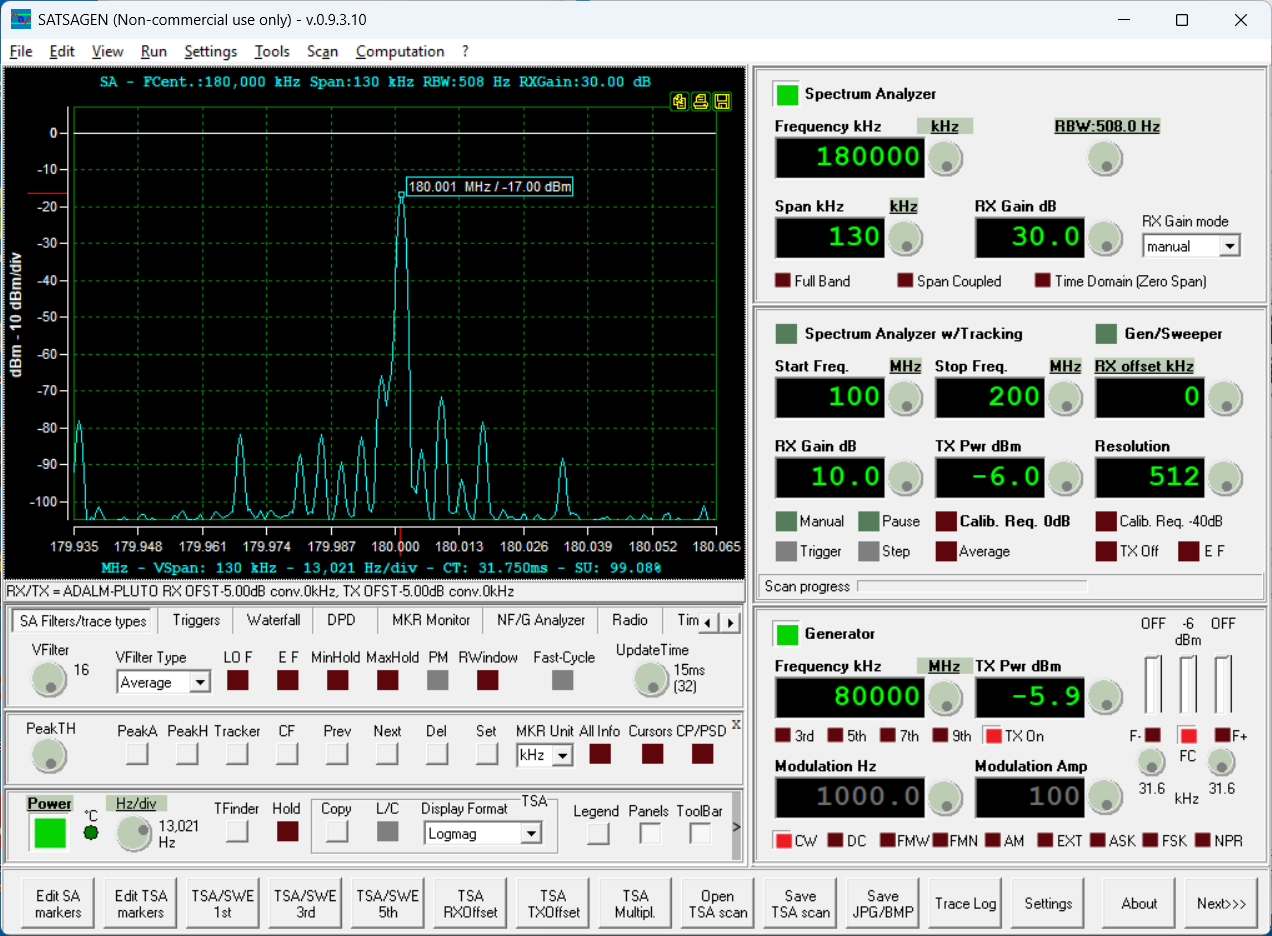
The conclusion from this activity is that there appears to be no significant difference between the ZFAS-15 analog RF attenuator when operated as a RF mixer, and a conventional SBL-1X RF mixer device (as tested).
Summary: Use what you have for either of the two applications (attenuator or mixer). While there may be some subtle differences, today's test showed essentially the same mixer performance between the two devices. YMMV!
All author photos taken with an iPhone 16e.