This page captures information about my Do It Yourself (self-made) test equipment. I have been working with, repairing, using, designing/building/testing various types of test equipment for many years. A few of the more recent project successes are listed below:
One-wire USB thermometer - An inexpensive temperature sensor with a packaged/hardened sensor element used for general laboratory remote sensing. This serial read-out thermometer is based on a COTS 1-wire sensor and an Arduino UNO processor board. Output can be observed using a PUTTY window or via a LabVIEW VI written to display or display/save the 1 message-per-second output. Multiple versions of this sensor have been built and are in regular use around the home laboratory. Details are at this blog post: https://qsl.net/n8dmt/1-wire-temp-sensor/index.html
Noise Figure Meter - The current NF meter version covers from 140 MHz to over 4 GHz and is based on SATSAGEN software controlling a ADALM Pluto SDR (or RTL-SDR) receiver with noise on/off controlled over USB to an Arduino + Relay Board interface supplying +28VDC to a commercial NoiseComm noise source. This is a very capable NF system and compares favorably to commercial systems costing well over $1K USD. A follow on project to utilize a far-lower-cost noise source is planned with coverage from 50 MHz up to approximately 2 GHz. Details for the current NF Meter version are at these blog posts: https://qsl.net/n8dmt/rf-noise-source-part-1/index.html https://qsl.net/n8dmt/rf-noise-source-part-2/index.html https://qsl.net/n8dmt/rf-noise-source-part-3/index.html
LabVIEW RF Power Meter - Have had a spare Mini-Circuits ZX47-55LN RF Detector module in the misc. RF modules box for a while now and having recently sold off my HP/Agilent RF power meters/sensors, wanted to put the little ZX47-55 detector to use as a RF power meter in the home laboratory. Built a functioning RF power meter using the ZX47-55LN sensor interfaced to a computer via a Digilent Analog Discovery 3 interface module and controlled by LabVIEW Community Edition software. Details are at the blog post: https://qsl.net/n8dmt/labview-rf-power-meter/index.html
Stand-Alone RF Power Meter - With the LabVIEW based RF Power Meter completed, the thought to create a stand alone benchtop RF level meter came into focus. The idea was to take a small embedded processor board, add a two line text display, and connect the ZX47-55 to it via an analog interface. Run it off of a wall wart DC (ideally +12V) module, and just plug it in and hook it up to RF when needed. Sounds simple right? The project was a success, with details at the blog post: https://qsl.net/n8dmt/stand-alone-rf-power-meter/index.html
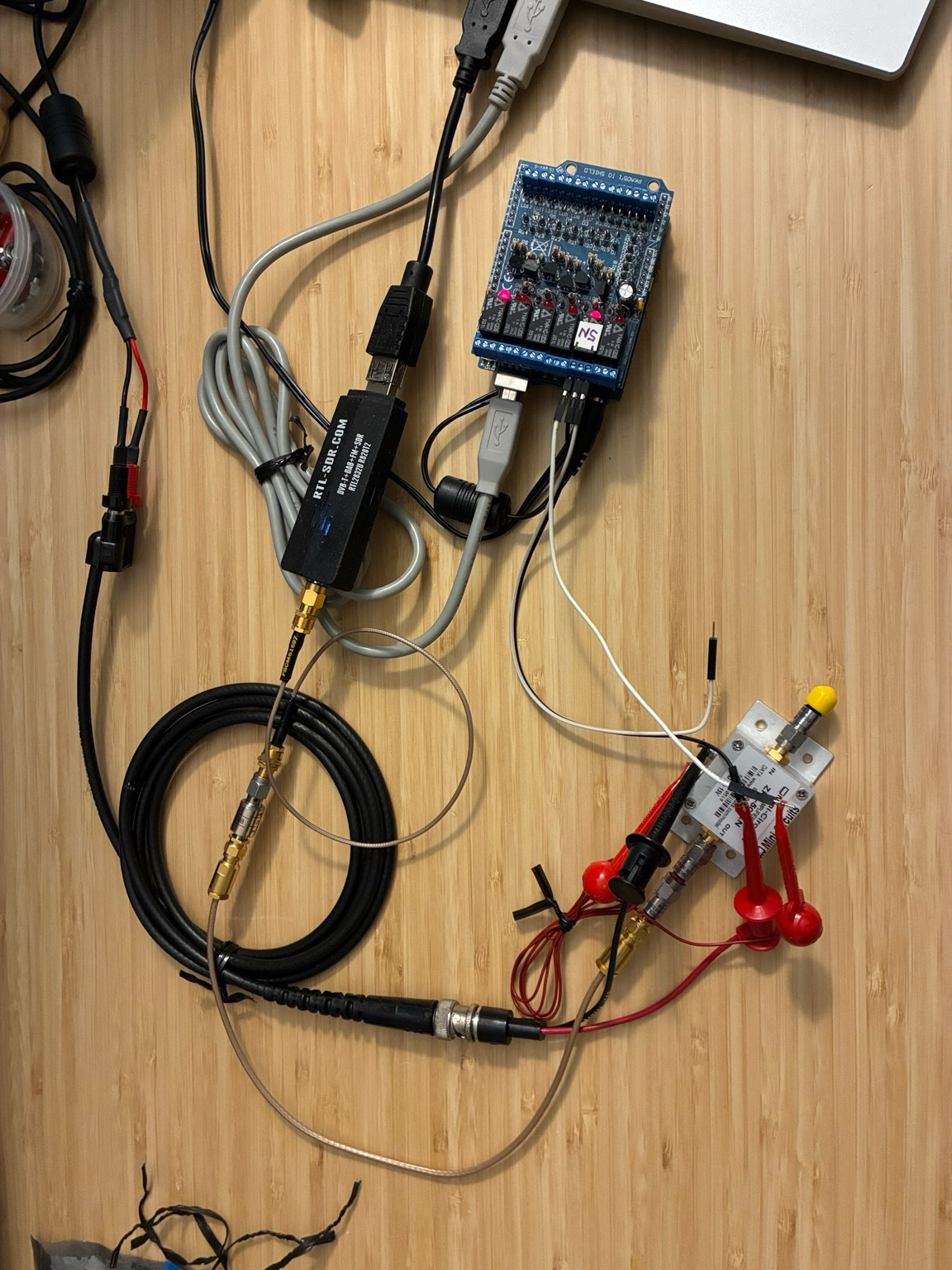
Low Cost Noise Figure Measurement System - Based on the DIY Noise Source, Arduino UNO Relay Control, RTL-SDR USB receiver, and using SATSAGEN running on a Win11 PC, this is the next planned project after the DIY Noise Source sub-project is completed. Looking for the most bang for the buck with this low-cost approach! Will add this web page once that project is underway. (Somewhat functional prototype setup pictured below - only working on 440 MHz at the moment.)
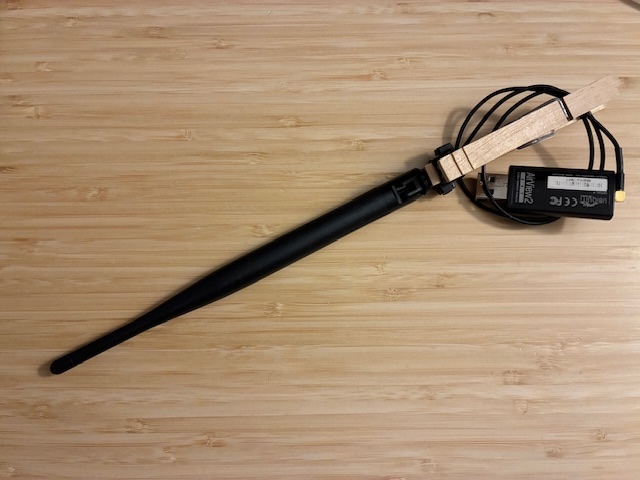
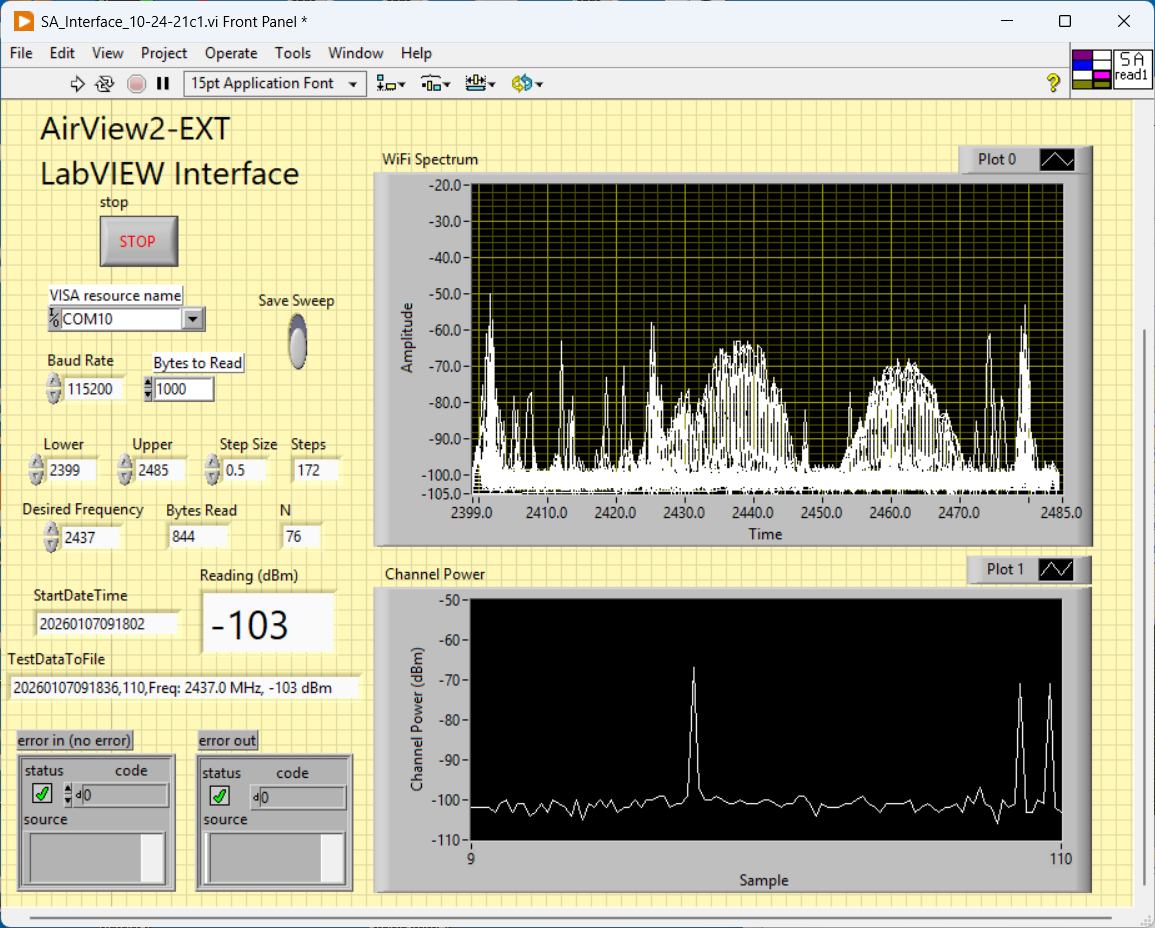
DIY LabVIEW interface for an obsolete Ubiquiti AirView2-EXT 2.4 GHz USB spectrum analyzer. After finding that the supplier had abandoned the hardware (stopped supplying WIN SW updates), the little USB spectrum analyzer was essentially useless. Instead of scrapping it, I reverse engineered the setup and operate serial protocols and wrote a simple LabVIEW interface to make it useful again. Happy to share the VI's if anyone is interested... .
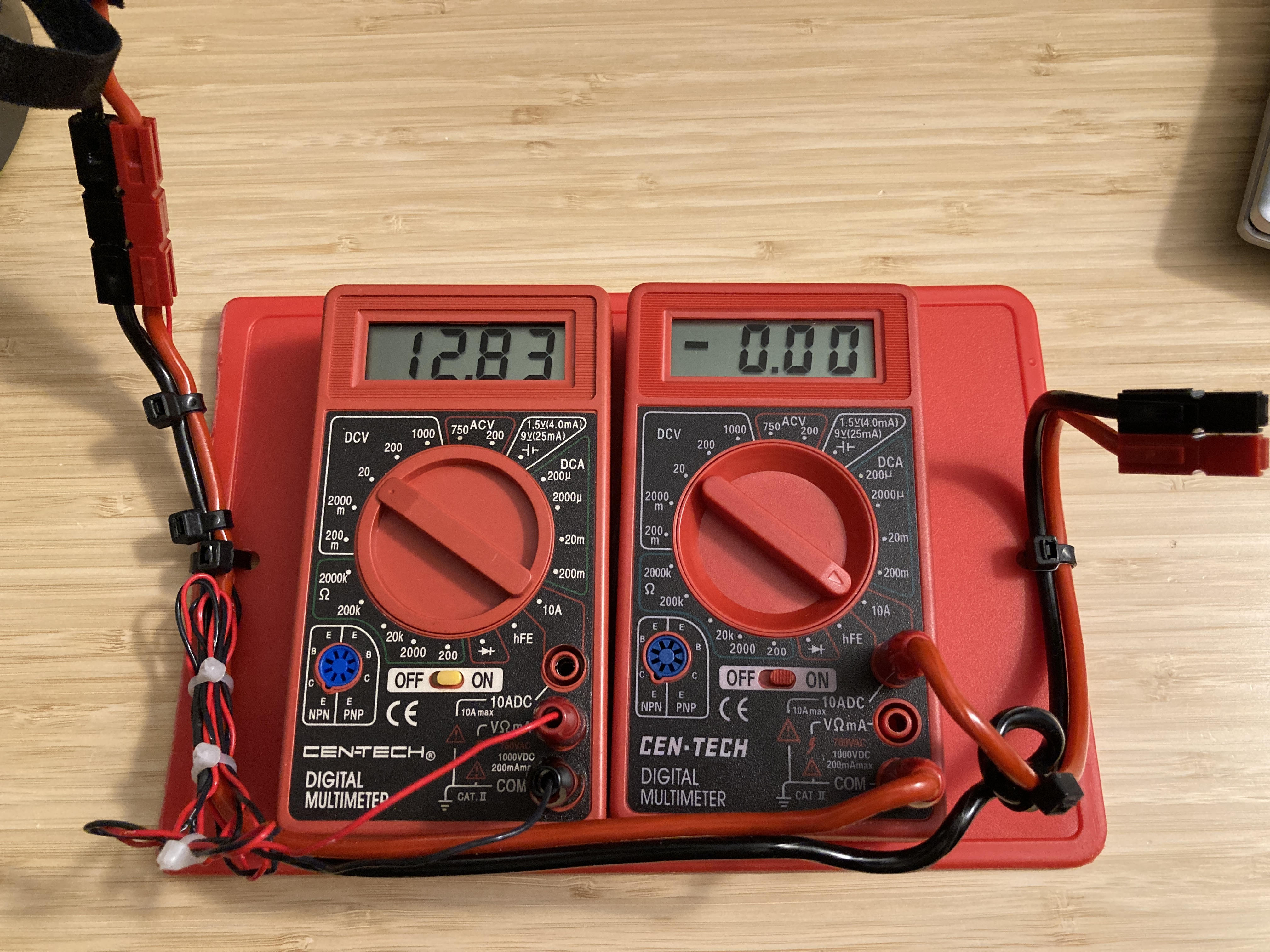
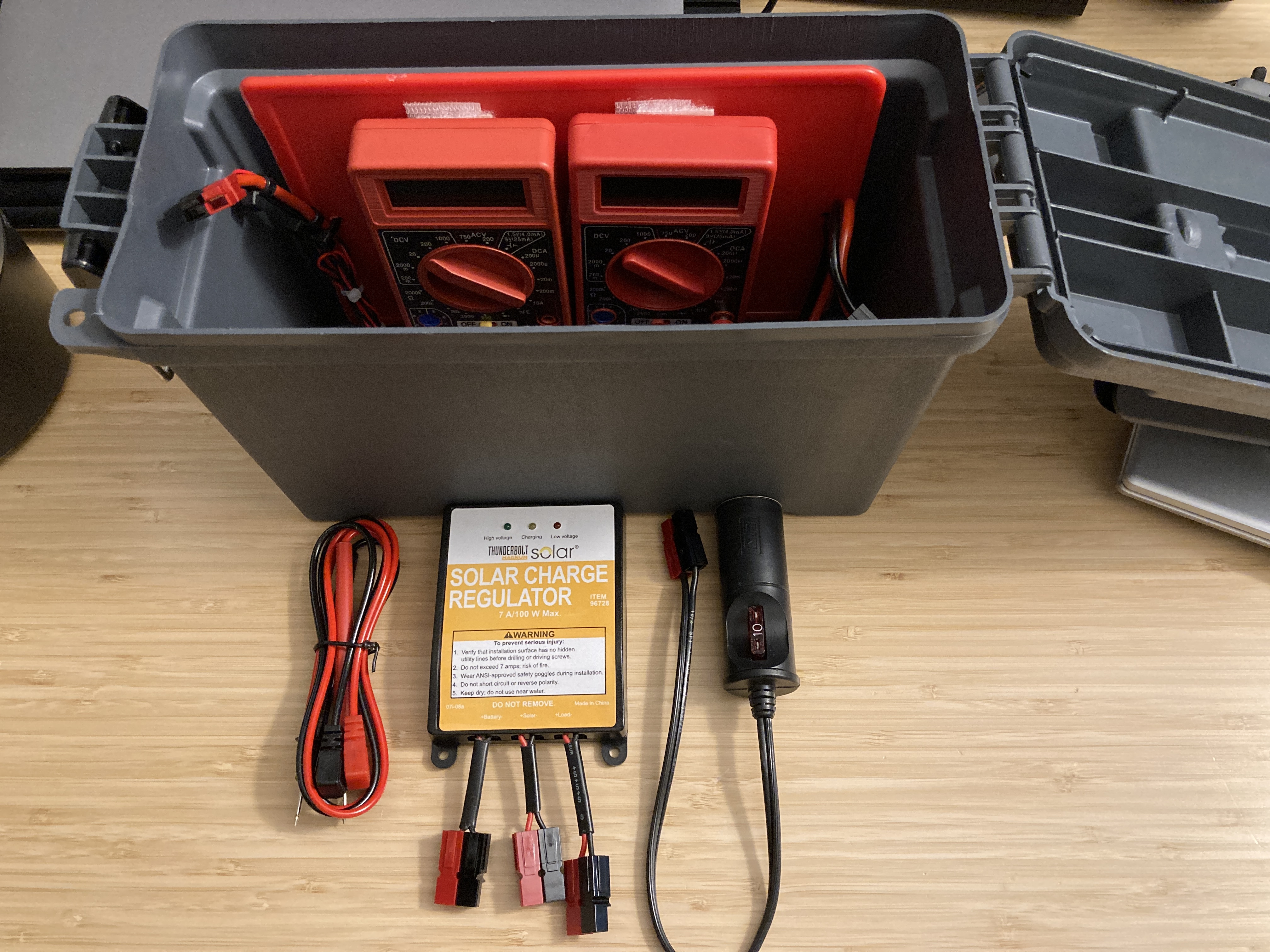
Solar voltage and current monitor with power pole input/output connections. Uses two free with coupon Harbor Freight digital multimeters velcro mounted onto a dollar store plastic cutting board. Attached the velcro onto the board and backs of the two DMM (allowing changing batteries easily) and drilled a few holes to keep the wiring in place. The thicker, #12 wire carries the series connection (current) while the smaller gauge wire monitors the parallel circuit (voltage). Used some surplus banana plugs to replace the supplied cheap/tiny-wire test probes for the meter connections. Additional strips of adhesive-backed velcro holds the V/I monitor board inside a plastic case for storage. Works well with the solar panels and the field ham radio battery system.
Will add new DIY test equipment items as they're created. You too can build and use your own test equipment. Give it a try!